A Prophecy Born of Midnight: Nick Drake
Two Recluses on the Dark Side of the Moon: Nick and Syd
A bedroom in Tanworth-in-Arden on a misty November morning in 1974. An empty bottle of antidepressants on the bedside table. When Nick Drake withdrew his hands from the world at the age of twenty-six, he left behind only three albums and a collection of unfinished stories.
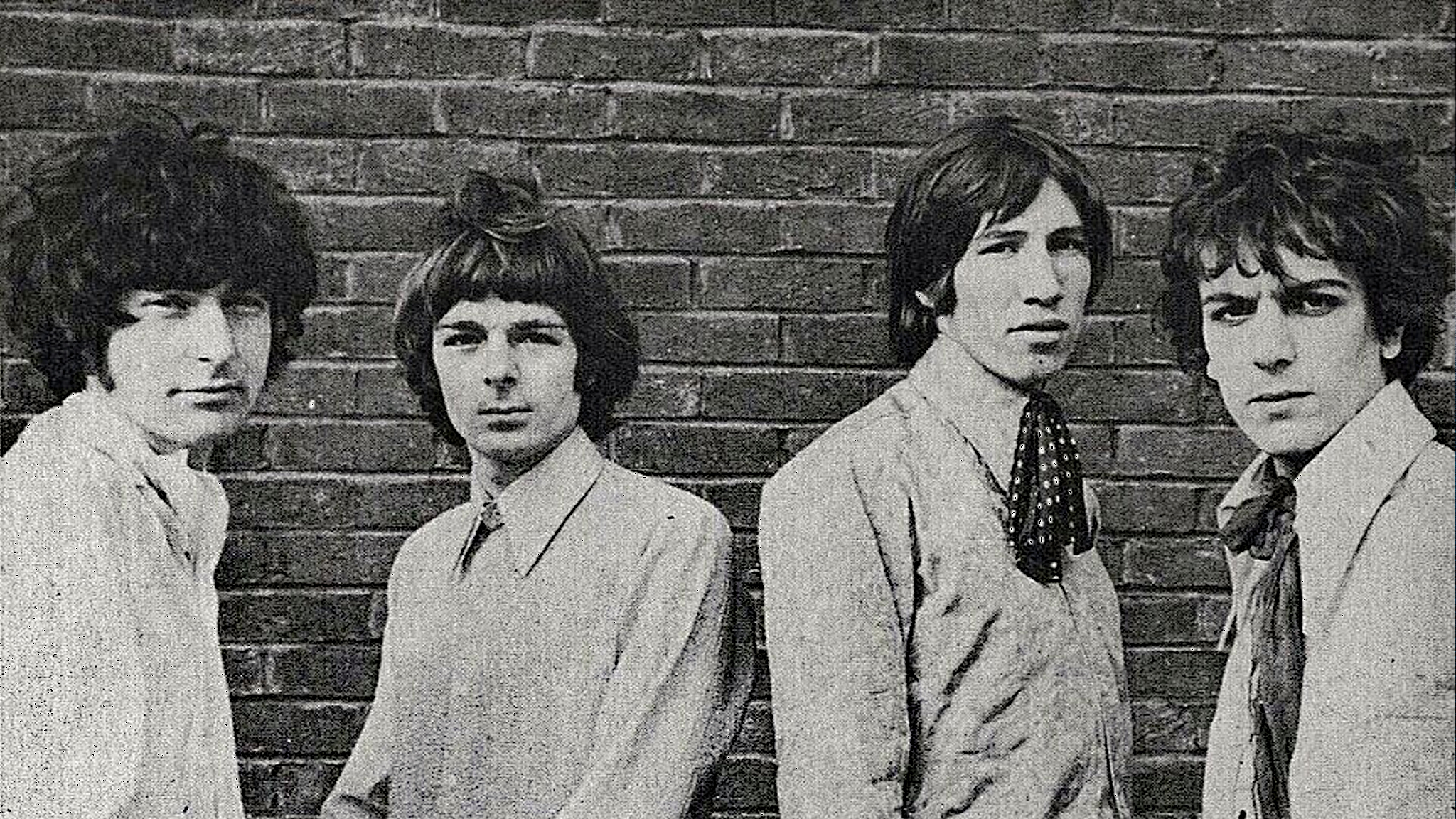
In reality, Drake’s story was a sharp slap to the face of the flamboyant London scene of the late sixties. In those years, the industry expected an artist to maintain a calculated image and deliver endless performances. Nick, however, refused to shine on stage. He remained an "outsider" who chose to whisper to the strings of his guitar. Joe Boyd, who discovered him, took a monumental risk when he recognized the raw genius inside this introverted youth. Boyd was a pivotal figure holding the pulse of the London underground music world; he was the man who had discovered Pink Floyd, produced their first professional recording “Arnold Layne", and introduced them to the legendary UFO Club stage.
Watch Pink Floyd, 1967 UFO club
At this juncture, we must introduce another name into the narrative: Syd Barrett. Boyd had witnessed from the absolute front row how Barrett, during the birth of Pink Floyd, pushed the very boundaries of his own mind before sinking into absolute silence. To Boyd, Nick Drake felt like the second act of this tragedy. Both shared roots in the stagnant stillness of Cambridge. While it is easy to romanticise them, both characters were genuinely sensitive young men. Syd Barrett, however, went beyond mere sensitivity, pushing the absolute boundaries of sonic experimentation.
Behind Nick Drake’s sensitive world lay not just industry-induced disillusionment, but a profound intellectual foundation. Having picked up the guitar at the prestigious Marlborough College at the age of sixteen and beginning his studies in English Literature at Cambridge University in 1967, Drake was an upper-middle-class boy. He admired figures like Buddy Holly, yet he murmured with the distinct melancholy of tragic English poets like Thomas Chatterton. The meticulousness of his lyrics, blended with a delicate and dreamlike folk aesthetic, was a direct reflection of his deep reverence for language and his sophisticated literary background. The British psychoanalyst Donald Winnicott’s observation regarding artists captures the very heart of Nick’s world: “In the artist of all kinds, one can detect an inherent dilemma, which belongs to the co-existence of two trends: the urgent need to communicate and the still more urgent need not to be found.” This tension became a lifelong destiny for Nick Drake, spanning all the painful years of his relationship with music. While he yearned to whisper something to the world through his songs, he sought to hide from it with equal intensity.
Although I haven't had the chance to read it yet, author Rob Chapman’s novel Unsung Unsaid: Syd and Nick in Absentia (Wymer Publishing, 2023) excites me deeply by bringing these two reclusive souls together at the very same table. Chapman imagines a fictional encounter in the summer of 1974, where Nick and Syd sit in a café, discussing their final, agonising studio recordings. The author's phrasing for this fictional meeting sums up everything perfectly: they are like a waiting “Vladimir and Estragon". Trapped within a Beckettian ambiguity, they are two strangers waiting for a salvation that will never arrive, or perhaps for a completed album.
This "waiting" was essentially the summary of Nick’s entire musical journey. He established his melancholic universe with his debut step, Five Leaves Left (1969), and subsequently responded to Joe Boyd’s attempts at "star-making" with Bryter Layter (1970). However, when commercial failure knocked on the door, even that faint light faded. Although Nick attempted to process this period with the support of his psychiatrist Brian Wells—a specialist in addiction and depression at the time—the overwhelming weight of being misunderstood prevailed. The café conversation in Chapman’s fiction stands as a silent rehearsal for this ultimate withdrawal.
The finale arrived with that cult masterpiece, recorded in absolute isolation from everything and everyone over the course of just two nights: Pink Moon (1972). Drake brushed aside Boyd’s grand orchestrations with the back of his hand, recording the barest state of his soul onto the tape. It was the final cry of a man standing on the razor-thin line between existence and nothingness.
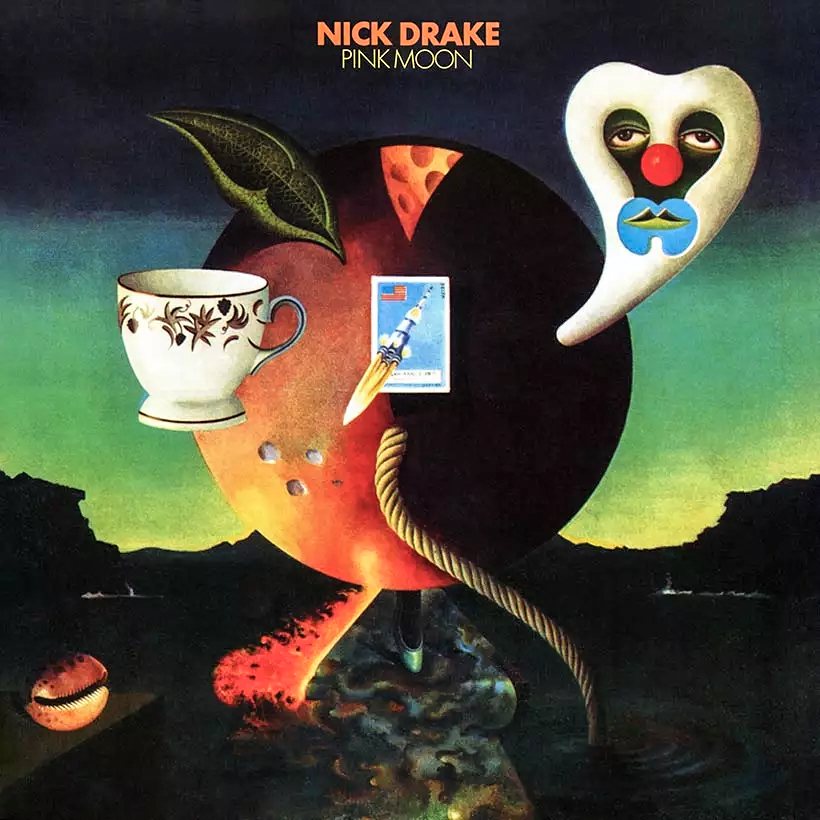
Nick Drake's Pink Moon Cover Art
Time possesses a strange sense of irony. Twenty-five years after his death, in 1999, Nick Drake’s voice echoed in a Volkswagen commercial. In the advertisement titled “Milky Way", a convertible glided through the darkness of the night under the moon, with Nick’s fragile whisper floating in the background. That night, millions of people asked the exact same question: "Whose voice is this?" The man whose albums had failed to sell even fifteen thousand copies during his lifetime topped the charts following a television commercial.
Nick Drake had written his own tragedy at the very beginning of his road. It was a prophecy laid out in his song “Fruit Tree”: “Safe in the womb of an earthly deep, changing her cast for the world to keep.” And so it was. The world waited for him to enter the earth, for a quarter of a century to pass, and for a car to glide under the moonlight just to finally discover him.
Syd and Nick—one burning out in a flash of light, the other fading softly away—ultimately met on the face of the same dark moon, at a rendezvous that never actually took place. Instead of becoming artificial figures in the chaos of the market, they chose to construct their own desolation as a sanctuary and remain inside. Barrett’s boundary-pushing experimentation and Drake’s whispered prophecy remain among the most honest, soulful answers ever given to the world...
Serkan Firtina
Contributor, BritRock Heaven
Discussion
Sign in to comment
Join the conversation — sign in to share your thoughts on this article.
No comments yet. Be the first to share your thoughts!